
General financial advice
Do you pay council tax on an empty property?
7 mins read
by
Aaron Jibromah
Last updated 16 September, 2026
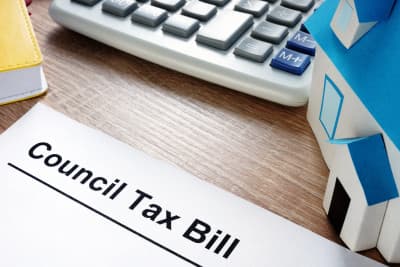
If you own a home that no one lives in, you might be asking yourself: do you pay council tax on an empty property? Consequently, it’s a common question for landlords, homeowners, and people who have inherited a house.
The simple answer is yes, in most cases you do. However, the rules are not the same everywhere. They depend on your local council, how long the property has been empty, and the reason it’s unoccupied.
In this guide, we’ll break down the rules, explain when you might get a discount, and show you how to avoid paying more than you need to.
Summary
- Owners of empty homes usually have to pay council tax, but rules and discounts vary by local council.
- Short-term exemptions may apply for certain situations, while long-term empty properties can incur premiums up to 300 percent.
- Acting quickly by contacting the council and exploring discounts or renting the property can help reduce costs.
How council tax works
Specifically, council tax is the charge you pay to your local authority for services like waste collection, road repairs, and local schools. However, usually, the person living in the property pays it. But when a home is empty, the bill often falls to the owner.
However, the tricky part is that the law lets councils set their own rules for empty properties. This means the answer to do you pay council tax on an empty property can change depending on where you live in the UK.
Paying council tax on an empty home
In many areas, you’ll pay the full council tax rate even if the house is empty. Councils argue that an empty home still needs some local services. For example, bins may still need collecting, and the street still needs lighting.
However, some councils give a short-term discount for empty properties. This discount is usually only for the first few months. After that, you pay the full amount.
That’s why it’s important to tell your council as soon as the home becomes empty. You may be able to get a reduced bill for a short time.
Common reasons for exemptions
There are certain cases where you may not have to pay council tax at all for an empty property. These exemptions are set out in law, but councils decide how to apply them.
You might not have to pay if, for example:
- The property needs major repairs – If your home is unfit to live in because of structural problems, you may get an exemption or reduction.
- The owner has died – If the property is empty because the owner has passed away, council tax is often waived until probate is complete.
- It has been repossessed – A home taken back by the mortgage lender is usually exempt until it’s sold.
- It’s a new build waiting to be sold – Developers sometimes get a grace period before paying council tax.
Nevertheless, even if you qualify for one of these exemptions, they usually last for a limited time. Once the period ends, you will need to start paying again.
Long-term empty property premiums
If you’re still asking do you pay council tax on an empty property after it’s been vacant for a long time, the answer is yes, and you may pay extra. As a result, councils can charge a premium for homes that are empty for over two years.
Here’s how it works in England:
- Over 2 years – The bill can be up to double the normal rate.
- Over 5 years – You could pay 200% of the normal rate.
- Over 10 years – Some councils charge up to 300%.
These premiums exist to push owners to use or sell their properties, helping tackle housing shortages.
Related article
Learn more: What are the current mortgage interest rates in the UK?
Differences across the UK
The rules are similar across England, Scotland, Wales, and Northern Ireland; however, they are not identical; therefore, it's important to check locally.
- England – Premiums start after two years, but rates vary by council.
- Scotland – Premiums can begin after just 12 months.
- Wales – Councils have wide freedom, with some charging 300% for long-term empty homes.
- Northern Ireland – There’s no council tax, but domestic rates apply, with different rules for empty properties.
Because of these variations, it’s always worth checking your local council’s exact policy.
Renovation and council tax
Some owners believe that if a home is uninhabitable due to renovation, they don’t have to pay council tax. In the past, this was true in many places. Now, most councils only offer a short-term reduction rather than a full exemption.
For instance, to get a discount, you’ll usually need to prove the property is not fit to live in. For example, this may involve an inspection or providing photos. Without proof, you could end up paying the full bill.
Furnished vs unfurnished
Another factor is whether the home is furnished. A furnished but empty property is often treated the same as an occupied one. That means you still pay the full council tax rate.
Meanwhile, an unfurnished property may get a short-term exemption or discount. But to qualify, it must be completely empty of major furniture and appliances. Even a bed or fridge left inside can mean you pay the full amount.
How to reduce your bill
If you want to lower your council tax bill on an empty property, here are a few tips:
- Contact the council early – The sooner you tell them, the better your chance of a discount.
- Ask about all exemptions – You may qualify for one you didn’t know about.
- Gather evidence – Photos, reports, and letters can support your claim.
- Consider letting the property – Renting, even short-term, can remove the premium and bring in income.
Get expert advice
We’ll find a professional perfectly matched to your needs. Getting started is easy, fast and free.
Find an advisorIf you don’t pay
Ignoring council tax bills can lead to serious problems; therefore, always act quickly. Councils can take legal action to recover the money. They might take money from your wages, benefits, or even use bailiffs. In the worst cases, court action can follow.
That’s why it’s best to deal with the bill straight away, even if you can’t pay it in full. Many councils will agree to a payment plan if you contact them early.
Why councils charge for empty homes
The main reason councils charge for empty homes is to stop properties sitting unused. An empty house can fall into disrepair, attract crime, and lower nearby house values.
By charging council tax, and adding a premium for long-term vacancies, councils hope to encourage owners to rent out, sell, or renovate these properties. This helps make more housing available for local people.
Key Points to Remember
- In most cases, yes is the answer to do you pay council tax on an empty property.
- Some exemptions exist, but they are usually short-term.
- Premium charges can double or triple your bill if the home is empty for years.
- Rules are different across the UK, so always check with your council.
- Acting quickly can save you money and stress.
Get expert advice
If you own a property that no one lives in, you should be ready to pay council tax unless you qualify for an exemption.
While the question do you pay council tax on an empty property seems simple, the real answer depends on where you live, how long the property has been empty, and why it’s unoccupied.
The best approach is to contact your local council as soon as the property becomes empty. This way, you can find out if you qualify for a discount, avoid penalties, and make a plan for the property’s future.
Whether you choose to rent it, renovate it, or sell it, knowing your council tax obligations will help you manage your costs.
Let Regulated Advice match you with a financial advisor for expert advice.
Join our newsletter
By signing up, you consent to receive our emails, news, and blogs. Your data will be stored securely with our Privacy policy and Terms & conditions.
Related articles
Does HMRC have new powers to raid people's bank accounts?
Budget summary 2025
Tax brackets and rates for 2025-2026
Explore the topic
General financial advice
Need a financial advisor?

Aaron Jibromah
Content Writer
Aaron is a trainee financial advisor and content writer for Regulated Advice. Aaron brings hands-on experience across financial services, having previously delivered FCA-compliant pension advice and worked directly with clients to clarify their options. He combines this practical background with an entrepreneurial track record, having founded and run his own business, and a solid grounding in risk management and financial analysis from his time as a trader.
Read next
General financial advice
Does HMRC have new powers to raid people's bank accounts?

General financial advice
Budget summary 2025
General financial advice
Tax brackets and rates for 2025-2026

General financial advice
What Is the personal savings allowance and how does it work?

Get professional advice